

Phase I and Phase II: What Actually Happens When the Liver Clears a Compound
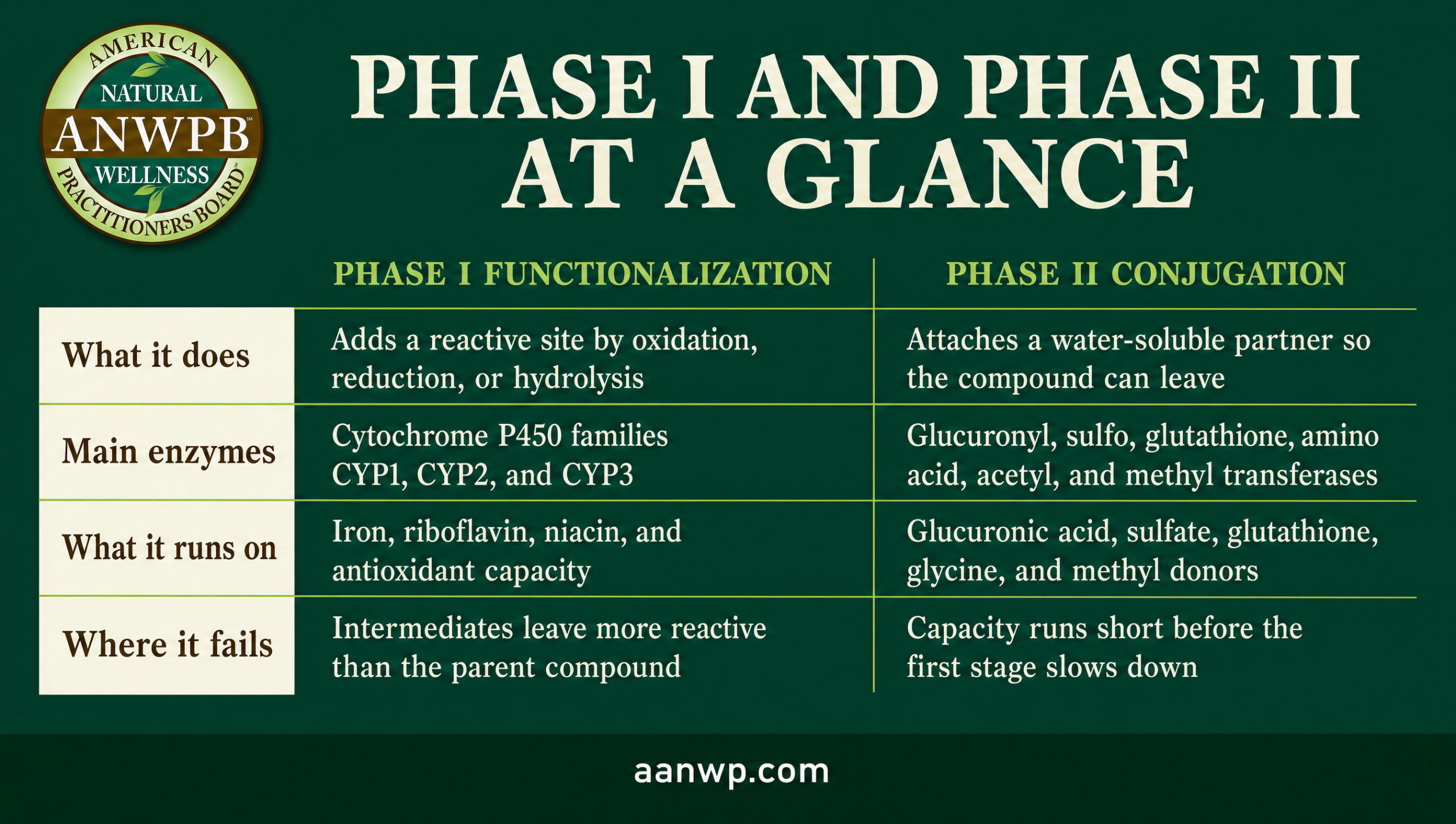
The liver clears a compound in two stages. Phase I uses cytochrome P450 enzymes to add a reactive site to a fat-soluble compound, and Phase II attaches a water-soluble partner such as glucuronic acid, sulfate, glutathione, an amino acid, an acetyl group, or a methyl group so the compound can leave the body in bile or urine. Difficulty arises when the first stage outpaces the second, or when one conjugation route lacks the specific nutrients it runs on. Cruciferous, allium, and citrus foods carry the strongest human evidence for supporting the second stage, and ANWPB board certifies practitioners who work from that level of detail.
The box on the desk says fourteen days. Inside it are a powdered drink mix, two bottles of capsules, a folded instruction card, and a printed list of foods to avoid for the duration. It arrived in the session because a friend recommended it, and the question on the table is whether finishing it is worth the effort. Somewhere inside a good answer there is a sentence about the liver, and the practitioner who reaches for that sentence often finds it thinner than expected.
Detoxification is a real physiological process with named enzyme families, measurable cofactors, and identifiable points where it slows down. The consumer version of the word borrowed the vocabulary and left the mechanism behind, which is why the word now signals so little. Getting the biochemistry precise is not an academic exercise. It changes what a practitioner asks on intake, what a practitioner notices in a food record, and how a practitioner answers when a client holds up a box and asks whether it does anything.
Phase I Does Not Clean Anything Up
The first stage of hepatic biotransformation is functionalization. Enzymes of the cytochrome P450 superfamily, membrane-bound heme-thiolate proteins concentrated in the liver but also present in enterocytes, kidney, lung, and brain, act on a fat-soluble compound by adding or exposing a reactive group through oxidation, reduction, or hydrolysis.

A hydroxyl, carboxyl, or amino group appears where there was none. The compound has now been chemically handled, but it is not yet on its way out of the body.
The part that surprises practitioners who learned the two-stage model as a cleaning sequence is that the Phase I product is frequently more reactive than the compound that entered. Functionalization creates electrophilic species capable of doing damage inside the cell.

This is not a defect in the system. It is the design, because the reactive site is precisely what the second stage grabs onto. The risk becomes real only when the second stage is not there to grab it.
The cytochrome P450 families divide along recognizable lines. CYP1A enzymes metabolize polycyclic aromatic hydrocarbons, heterocyclic amines, and polychlorinated biphenyls, and they also catalyze the two-hydroxylation and four-hydroxylation of estrogens, which is why they draw attention in hormone-related work. CYP2E1 handles ethanol and bioactivates nitrosamines and aflatoxin B1, and it generates free radicals regardless of the substrate in front of it. CYP3A4 carries the metabolism of more than half of all pharmaceuticals, which makes it the single enzyme most likely to matter when a client is taking several at once.
The practical consequence is that speeding up Phase I is not a goal in itself. A protocol that raises cytochrome activity without attention to what happens next increases the production of intermediates that need somewhere to go. Excessive CYP1A activity in the absence of adequate second-stage support has been described as amplifying rather than reducing the damage done by environmental procarcinogens, which inverts the outcome the protocol was reaching for.
Phase II Is Six Different Conversations
Conjugation is the second stage, and calling it a single phase obscures how differently its parts behave. Six enzyme classes attach six different water-soluble partners: glucuronic acid through the UDP-glucuronosyltransferases, sulfate through the sulfotransferases, glutathione through the glutathione S-transferases, amino acids such as glycine and taurine through the amino acid transferases, an acetyl group through the N-acetyltransferases, and a methyl group through the methyltransferases. Each attachment makes the metabolite more hydrophilic and moves it toward excretion in bile or urine.
Each route also runs on its own supply line, and this is where the model becomes clinically useful. Glucuronidation is estimated to handle between forty and seventy percent of medications in humans, and it is the principal route for bilirubin. Sulfonation depends on a depletable reserve of inorganic sulfate, which means the sulfur-containing foods in a person’s week are not incidental to it. Glutathione conjugation depends on a tripeptide built from cysteine, glutamate, and glycine, with methionine and cystine as the precursors whose depletion lowers status directly. Amino acid conjugation requires dietary protein for the plain reason that it consumes amino acids. A scientific review of food-based modulation of these pathways sets out the nutrient dependencies route by route.
Methylation deserves its own note, because it consumes S-adenosyl-L-methionine and therefore depends on methionine, vitamin B12, vitamin B6, betaine, folate, and magnesium together. Catechol O-methyltransferase, the enzyme discussed most often for its part in estrogen metabolism, sits inside that dependency. A person can be well supplied for methylation and short on sulfate at the same time. Handling Phase II as one dial to turn up misses the clinical question entirely. The useful question is narrower: which of the six routes is under-supplied in this particular person.
Where the Bottleneck Actually Sits
Two patterns account for most of what practitioners describe as a person who does not tolerate a detoxification protocol. The first is an imbalance between the stages, with functionalization proceeding at a normal or elevated rate while conjugation capacity runs short, leaving reactive intermediates in circulation longer than they should be. The second is a shortage confined to a single conjugation route while the others are adequate, which produces a narrower and more specific picture than a general statement about a sluggish liver ever could.
Genetics sits underneath both patterns. Polymorphisms in these enzyme families are common and consequential. Individuals with the GSTM1-null genotype excrete isothiocyanates more rapidly, which has led some researchers to conclude that the benefit of cruciferous vegetables is blunted in that group. Women carrying one UGT1A1 variant responded to a citrus intervention in one study while those with other variants did not. None of this is knowable from a food record alone, which is a good reason for humility about how precisely any dietary approach can be aimed without that information.
Where a route is under-supplied, the raw material is ordinary food rather than anything exotic.
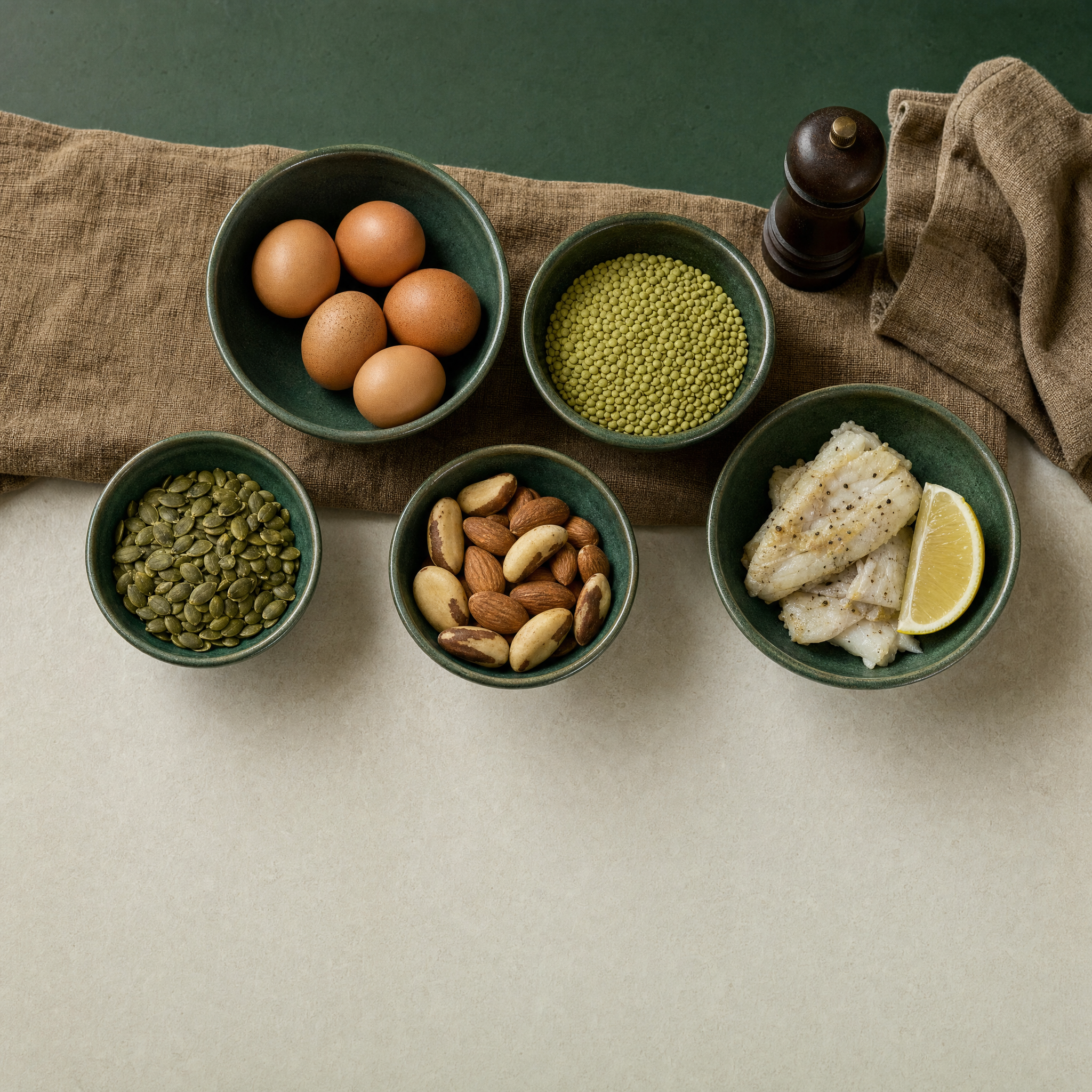
Sulfur for sulfonation and for glutathione arrives in eggs, fish, shellfish, poultry, lentils, cabbage, watercress, horseradish, Brazil nuts, and almonds. Glycine for amino acid conjugation arrives in poultry, pork, beef, soybean, peanuts, pumpkin seeds, and amaranth. Glutathione synthesis itself draws on vitamin B6, magnesium, and selenium, and clinical work has shown curcuminoids, silymarin, folate, and alpha-lipoic acid restoring depleted status in humans, with N-acetyl cysteine used the same way. Reading a food record with those categories in mind turns a vague impression of poor diet into a specific observation about which conjugation route has the least behind it.
There is also a step after conjugation that undoes it. Beta-glucuronidase enzymes in the gut cleave the glucuronide bond and release the compound back into circulation. D-glucaric acid, found across common fruits, vegetables, and legumes, is the inhibitor cited most often for that enzyme, although a human trial combining cruciferous vegetables, citrus fruits, and soy foods found no measurable effect on beta-glucuronidase activity. Animal work using strawberry and blackcurrant polyphenol extracts is more encouraging. The honest summary is that the mechanism is plausible and the human evidence has not arrived yet.

What the Human Evidence Actually Supports
Cruciferous vegetables carry the strongest human signal in this territory. Induction of CYP1A2 by crucifers is well established in clinical work, and cruciferous intake also raises UDP-glucuronosyltransferase and glutathione S-transferase activity in humans. That combination is the one a practitioner would want, with second-stage capacity rising alongside first-stage activity rather than trailing behind it. Allium vegetables and citrus show the same directional effect on glutathione S-transferases, and watercress, garden cress, and broccoli carry clinical rather than animal evidence.
The clearest interventional evidence comes from a twelve-week randomized trial in Qidong, China, where 291 participants living in an area of substantial airborne pollutant exposure received either a broccoli sprout beverage supplying 600 micromoles of glucoraphanin and 40 micromoles of sulforaphane daily or a placebo. Urinary excretion of the glutathione-derived conjugate of benzene rose by roughly 61 percent and that of acrolein by roughly 23 percent in the intervention arm. Crotonaldehyde did not follow. Excretion of the benzene conjugate ran higher in participants who were GSTT1-positive than in those carrying the null genotype, in both arms of the trial.
What that trial demonstrates is an increase in the excretion of conjugated pollutants, which is a mechanistic endpoint rather than a clinical one. It does not establish a health outcome, it was conducted in a population carrying unusually high exposure, and one of the three compounds measured did not respond at all. Stating those limits is part of reporting the finding accurately. It is also what allows the finding to survive scrutiny when a client repeats a competing claim picked up somewhere less careful.
The other caution running through this literature is that dose direction reverses. Curcumin at a low dietary percentage induced CYP1A1 in animals while a higher percentage of turmeric inhibited it. Kale inhibited CYP1A2 at an intake fifteen times typical human consumption, while an equivalent volume of cabbage produced no such effect. Several compounds behave as bifunctional modulators, inducing at one dose and inhibiting at another, and vitamins A, C, and E along with N-acetyl cysteine have been implicated as inhibitors of Nrf2 signaling at high doses. A varied whole-food diet is the position this evidence actually supports. Supraphysiological single agents are not.
Explaining It Without the Marketing Vocabulary
The client with the box does not need the enzyme names. She needs an accurate mental model, and the accurate model is not a clogged filter that requires periodic flushing. The liver is running this two-stage conversion continuously, on hormones and gut metabolites and medications and everything else that crosses it, and it has been doing so since long before the box arrived. What it needs is raw material and a reasonable load, not an intervention scheduled for fourteen days.
Language that holds up in the room is plain. The body converts fat-soluble compounds into water-soluble ones in two steps so they can leave in bile or urine. The second step consumes specific nutrients, so protein, sulfur-containing foods, and a wide range of vegetables matter more than any product does. And a short program cannot accomplish much that a consistent pattern of eating does not already accomplish better. That framing is accurate, it is defensible, and it makes no claim about disease.
On intake, the questions that follow from the mechanism are ordinary ones. Whether protein intake is adequate across the week, given that conjugation consumes amino acids.
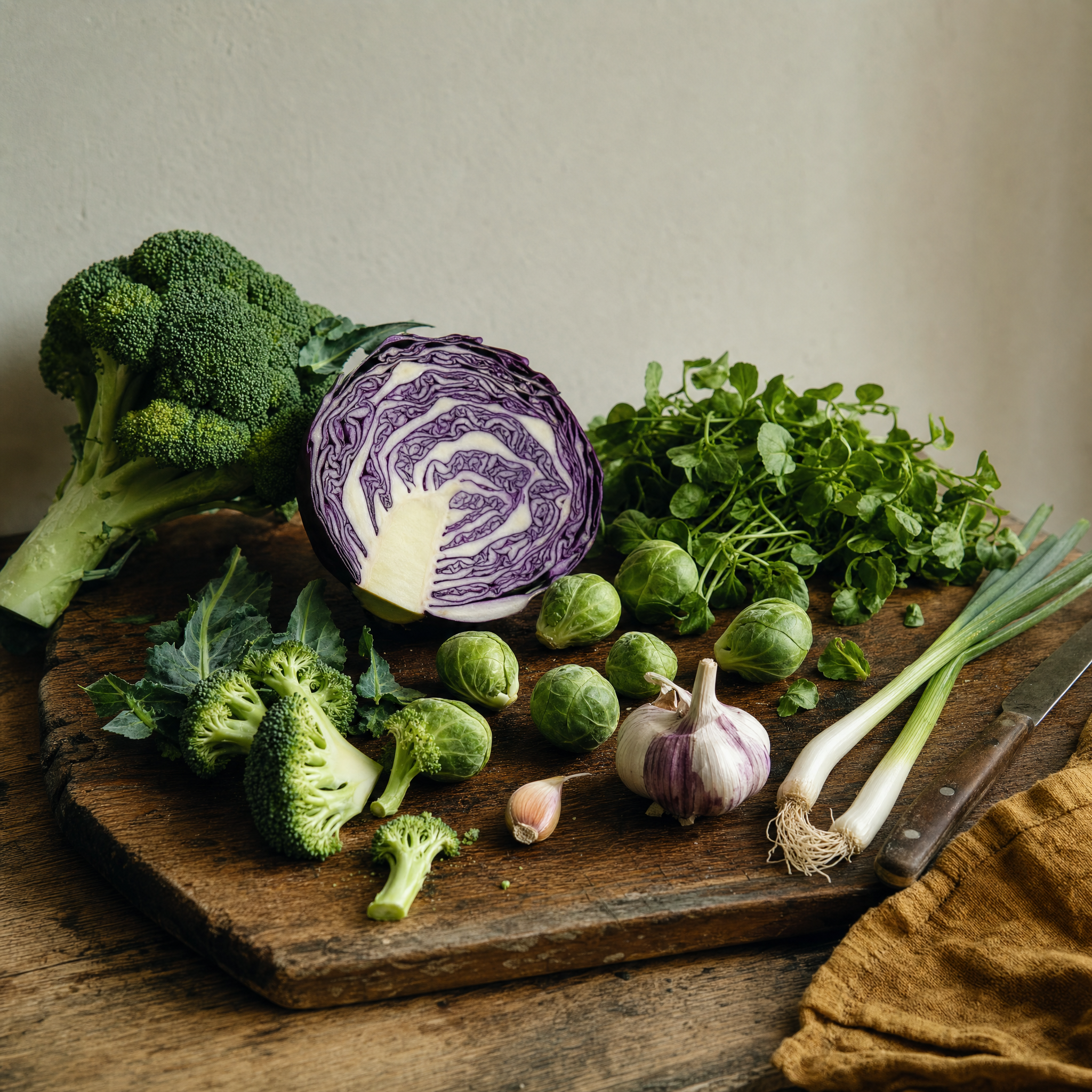
Whether sulfur-containing foods appear regularly, or whether a restrictive eating pattern has removed most of them. How often cruciferous and allium vegetables show up. What the alcohol pattern looks like, given CYP2E1. And what sits on the medication list, given how much traffic moves through CYP3A4 and how readily grapefruit and several concentrated botanicals interact with it. None of these questions requires a laboratory panel, and each one is more informative than the name of the product a client happens to be holding.
Precision of this kind is the difference between using a word and understanding it, and a client can hear that difference inside a single sentence. A practitioner who can name the enzyme family, the cofactor, and the point where clearance actually slows is working from knowledge that has been examined rather than from vocabulary that has been borrowed, which is what education reviewed, knowledge tested, and competency publicly verified is for. ANWPB supports natural wellness practitioners earning exam-based board certification who do this kind of mechanism-level reasoning.