Milk Thistle, Beyond Liver Detox: A Full Clinical Profile
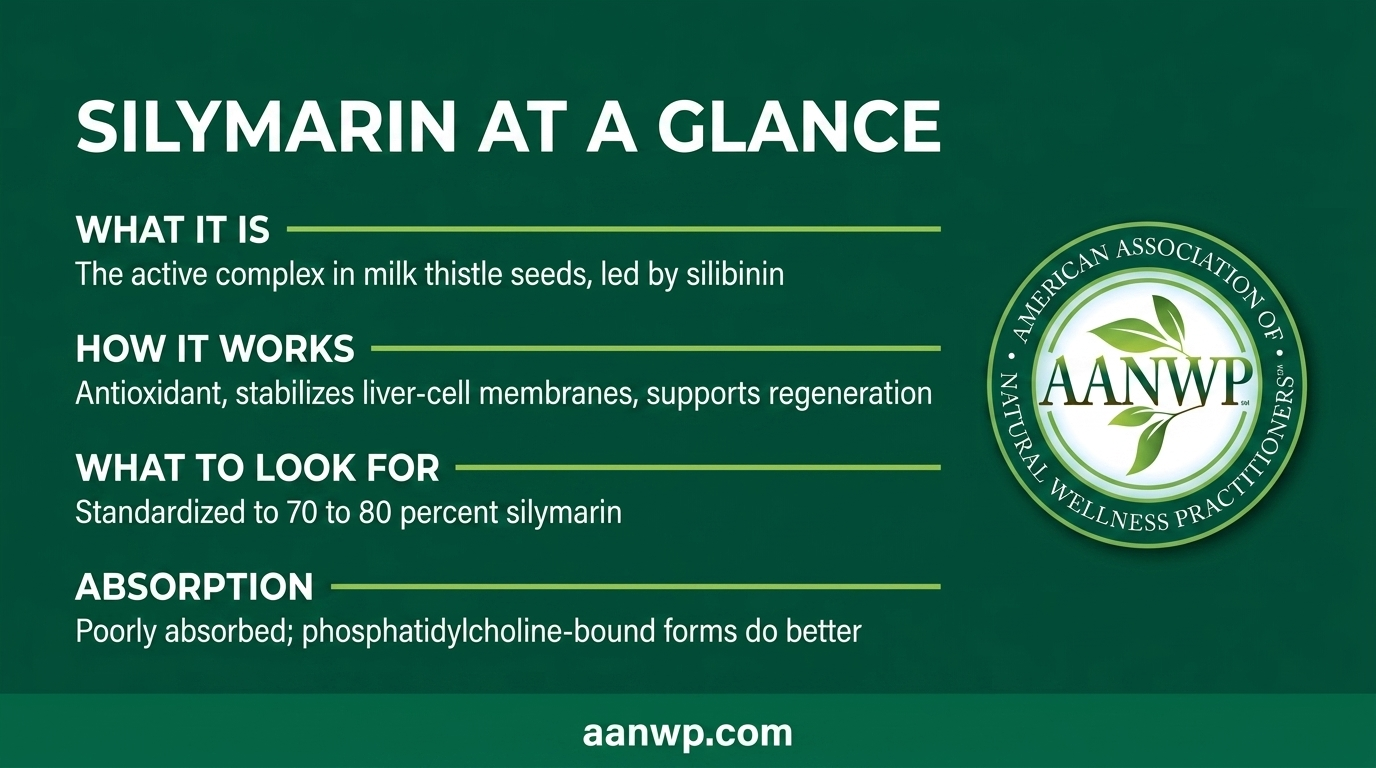
Milk thistle, Silybum marianum, works through its active complex silymarin, dominated by silibinin. It protects liver cells as an antioxidant, stabilizes their membranes against toxins, supports regeneration, and has anti-inflammatory and antifibrotic effects, rather than detoxing or flushing the liver. It is best supported for fatty liver, drug-induced liver stress, and as an adjunct in chronic hepatitis, and is poorly absorbed, so standardized extracts of 70 to 80 percent silymarin and phosphatidylcholine-bound forms matter. Cautions include daisy-family allergy, pregnancy, and possible medication interactions. AANWP supports natural wellness practitioners earning non-exam board certification.
A client sets a bottle of milk thistle on the table and asks the question the practitioner hears constantly: I read that this detoxes the liver, should I be taking it? It is a fair question with a more interesting answer than the label suggests. Milk thistle is neither the miracle nor the gimmick it is often made out to be. It is one of the most studied botanicals in the materia medica, and knowing its real profile lets a practitioner place it with precision.
For a natural wellness practitioner, detoxes the liver is exactly the kind of phrase worth replacing with something truer. Milk thistle, and specifically its active complex silymarin, has a genuine and well-characterized role in supporting liver health, alongside real limits and real cautions. What follows is the full clinical picture: what it is, where it fits, how it is dosed, where it should be avoided, and what it pairs with.

What Silymarin Actually Is
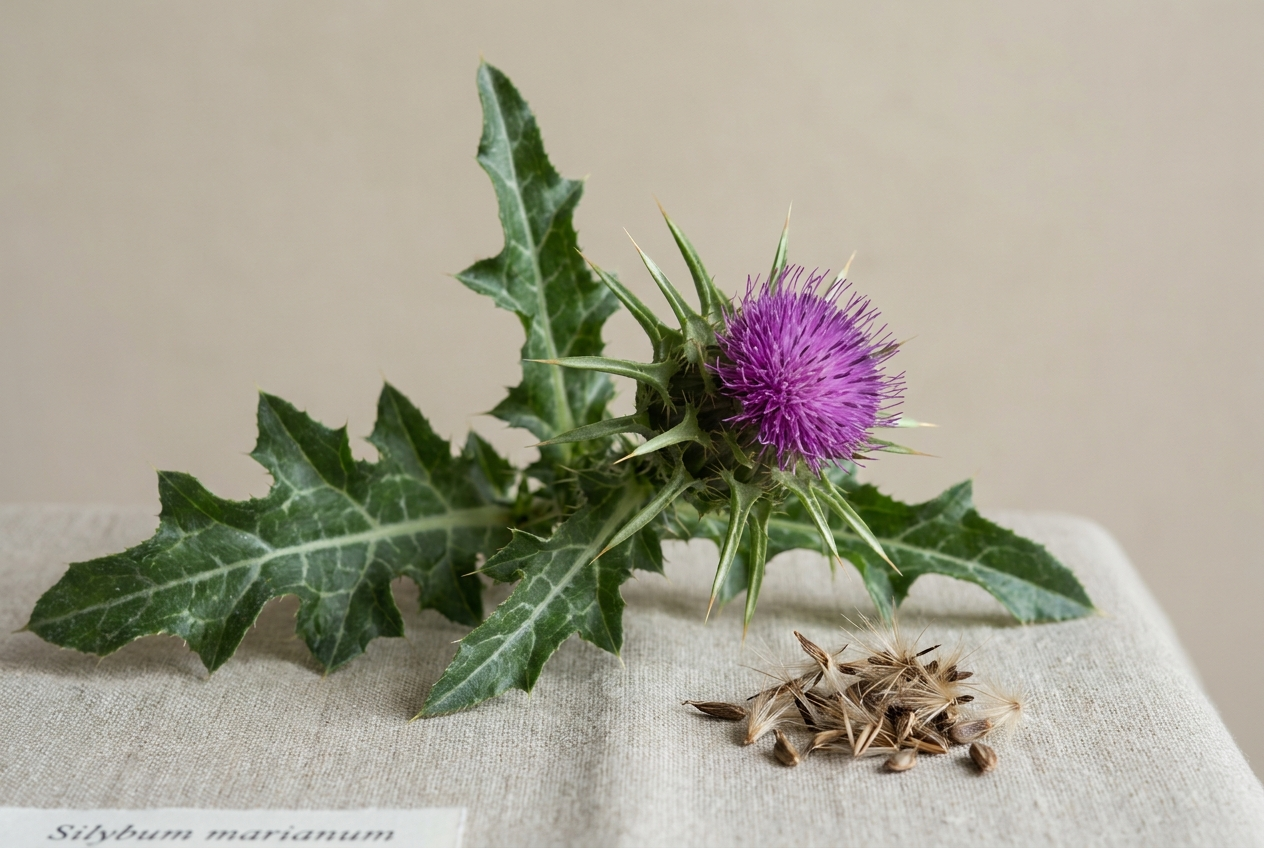
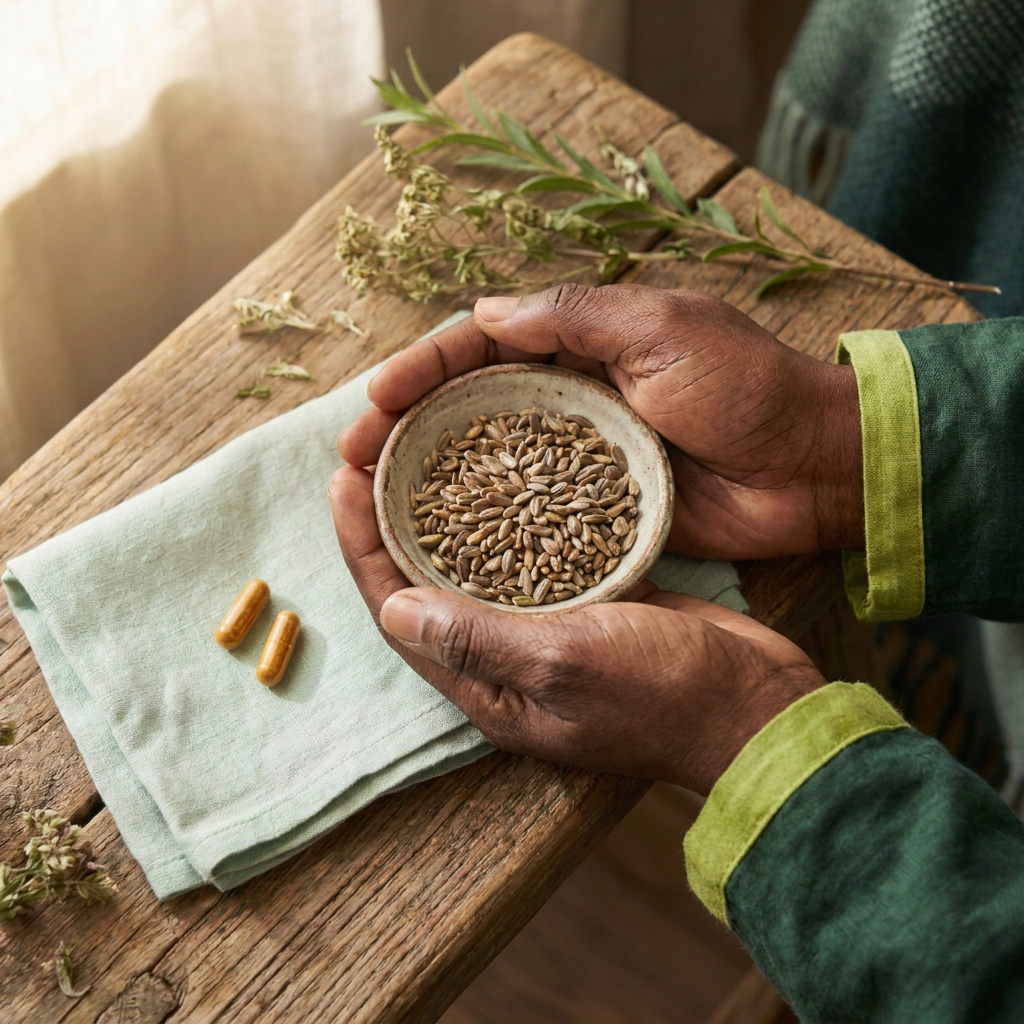
Milk thistle is Silybum marianum, a spiny Mediterranean plant in the daisy family, and the medicine lives in its seeds. The active fraction is not a single compound but a complex called silymarin, a group of flavonolignans dominated by silibinin, also written silybin, the most abundant and most active of the group. When a practitioner talks about milk thistle working, they are really talking about silymarin, and more specifically about silibinin.
The way it protects the liver is now reasonably well understood, and it is worth knowing because it explains both the promise and the limits. Silymarin appears to act through several complementary mechanisms: it is a potent antioxidant that scavenges free radicals in a tissue constantly exposed to them; it helps stabilize the outer membrane of liver cells so that certain toxins have a harder time getting in; it supports the liver’s own regeneration by encouraging protein synthesis in hepatocytes; and it has anti-inflammatory and antifibrotic effects that may slow the scarring that drives chronic liver disease. In short, it protects liver cells and supports their repair. It does not flush or cleanse anything, and dropping that language is the first step toward using it well.
One practical wrinkle shapes everything downstream: silymarin is poorly absorbed. It does not dissolve well in water and undergoes extensive first-pass metabolism, so a great deal of what a person swallows never reaches the bloodstream in active form. This single fact explains why standardized extracts and enhanced formulations exist, and why the form a client takes matters as much as the dose.
It helps, too, to know that none of this is new. Milk thistle has been used for liver and gallbladder complaints since antiquity, described by the Greek physician Dioscorides nearly two thousand years ago and carried through the Western herbal tradition ever since. That long history is not proof of anything on its own, but it is a reminder that modern research has largely been confirming and refining an old observation rather than inventing a new one. A practitioner can offer a client both: the weight of tradition and the discipline of the evidence.
A quick word on standardization makes the rest of the profile easier to read. Because silymarin is a mixture rather than one molecule, reputable extracts are standardized to a set percentage of the whole complex, and often to a specified share of silibinin within it. That is why two products can both say milk thistle on the front and behave very differently once they are in the body. When a practitioner learns to read the supplement facts panel rather than the marketing on the label, a good deal of the confusion around this herb quietly resolves.
Where It Fits: Indications
The strongest and most consistent story for silymarin is liver-cell protection, and the clinical evidence, while imperfect, is substantial. A systematic review of randomized trials found that most studies reported reduced liver enzymes with silymarin supplementation, a marker of reduced stress on liver cells, though a meaningful minority of studies showed no change. That honest split is the right way to hold it: helpful for many, not a guarantee for all.
In practice, silymarin earns its place as supportive care in non-alcoholic and alcohol-related fatty liver, in drug-induced liver stress, and as an adjunct in chronic viral hepatitis, always alongside the real work of addressing the cause. Its most dramatic and best-established use is one most practitioners will never see firsthand: intravenous silibinin is a recognized part of hospital care for poisoning by the death-cap mushroom, Amanita phalloides, where it helps block the toxin from entering liver cells. There are also early signals for metabolic markers and blood sugar, but these are secondary. The honest headline is that milk thistle is a liver-support herb first, and most other claims are either extensions of that or still speculative.
It is worth being equally clear about what the evidence does not show, because a practitioner’s credibility rests on it. Silymarin has not been shown to reverse established cirrhosis, and results in advanced disease are mixed. It is a protective and supportive agent, most valuable earlier rather than later, and most valuable as one part of a plan rather than a standalone answer. Framing it that way to a client is not hedging. It is the difference between selling hope and offering help.
A concrete example brings the placement into focus. A client in their fifties with early fatty liver, borderline enzymes, and a real willingness to change their diet is close to an ideal candidate: the herb has something to protect, the person is addressing the cause, and there is a measurable marker to follow over a few months. A client who wants milk thistle mainly so they can keep drinking as before is the opposite case, and saying so kindly is part of the work. The herb rewards the practitioner who matches it to the right person at the right moment, and it disappoints the one who reaches for it as a reflex.
Dosing and Forms
Because absorption is the limiting factor, the label matters more here than with many herbs. Look for an extract standardized to roughly 70 to 80 percent silymarin; the raw ground seed is far weaker and unreliable. A commonly used range is about 140 milligrams of silymarin two to three times daily, though studies have used considerably more, and the herb carries a wide margin of safety that makes this range comfortable to work within.
Where a practitioner can add real value is in the form. Because plain silymarin absorbs so poorly, formulations bound to phosphatidylcholine, sold under names such as silibinin phytosome, reach the bloodstream far more effectively and can achieve similar effects at lower doses. For a client who is going to spend money on milk thistle anyway, steering them toward a well-formulated, standardized product is often the single most useful piece of guidance a practitioner can give, more valuable than nudging the dose up or down.
Quality is the quiet variable behind all of this. Botanical supplements vary widely in what the bottle actually contains, and milk thistle is no exception, so a practitioner who knows which manufacturers test and standardize their extracts is giving a client something the label alone cannot. When results seem to fall short of what the research would predict, the product is often the first place to look, before the dose and well before the conclusion that the herb simply does not work for this person.
Timing and duration deserve a mention as well. Milk thistle is generally taken with food, both for tolerance and because a little dietary fat may aid its absorption, and it is a herb of patience rather than of quick effect. Where the goal is supporting liver enzymes or general resilience, a fair trial runs for several weeks to a few months, ideally with a simple before-and-after marker where one is available. Setting that expectation up front spares a client the disappointment of judging a slow, protective herb by the standard of something meant to be felt overnight.
Contraindications and Cautions
Milk thistle is remarkably well tolerated, which is part of why it is so widely used, but a full profile means naming the cautions plainly. The safety literature is reassuring without being empty. The most common adverse effect is a mild gastrointestinal or laxative one, usually transient. The clearest contraindication is allergy: because the plant belongs to the daisy and ragweed family, a client with a known sensitivity to that family can react to it, and that is worth asking about before recommending it.
Two further cautions belong in any thorough profile. Data in pregnancy and lactation are insufficient, so the conservative position is to avoid it there without a specific reason.

And silymarin can interact with some of the liver enzymes that metabolize medications, which in theory could shift drug levels; in practice the effect appears modest for most drugs, but it is worth a check whenever a client takes a medication with a narrow therapeutic margin, and a quick word with whoever manages that medication. None of this makes milk thistle a risky herb. It makes it one a practitioner should place with the same care they would give anything that touches the liver.
Combinations and Placement
Milk thistle plays well with others, and a practitioner who understands it thinks in combinations rather than in a single capsule. It pairs naturally with other liver-supportive nutrients: N-acetylcysteine, which supports glutathione, the liver’s master antioxidant; phosphatidylcholine, which both aids silymarin’s absorption and supports cell membranes in its own right; and gentler botanicals such as dandelion root. Where the goal is broad resilience rather than liver protection specifically, it sits comfortably alongside adaptogens in a well-built protocol.
How a practitioner introduces it matters as much as what they pair it with. Naming the specific reason for the recommendation, protecting liver cells while the client does the harder work on diet or alcohol, turns a vague supplement into a considered part of a plan the client understands and can stay with. That clarity is also what sets a practitioner apart from a shelf at the health-food store: not access to the bottle, which anyone has, but the reasoning that tells a person whether this particular herb belongs in their case at all.
The most important placement skill, though, is knowing when milk thistle is not the answer. It supports a liver under load; it does not remove the load.
Recommending silymarin to a client who is still drinking heavily, or reaching for it to paper over a diet that is driving fatty liver, is the herbal equivalent of bailing a boat without patching the hole. Used well, milk thistle is a genuine ally, a well-earned place in the materia medica for a botanical that has been quietly protecting hepatocytes since Dioscorides wrote it down. Used as a detox, it is mostly a wasted opportunity. The difference sits entirely with the practitioner who understands the full profile.
Knowing a botanical this well, its mechanisms, its evidence, its dosing, and its limits, is what separates confident practice from repeating a label. AANWP supports natural wellness practitioners earning non-exam board certification who build that depth herb by herb.